
Vitrified Tiles Online: Complete Buying Guide for Indian Homes (2026)
IntriHub Materials Engineering Team
Surface Engineering & Sourcing Desk
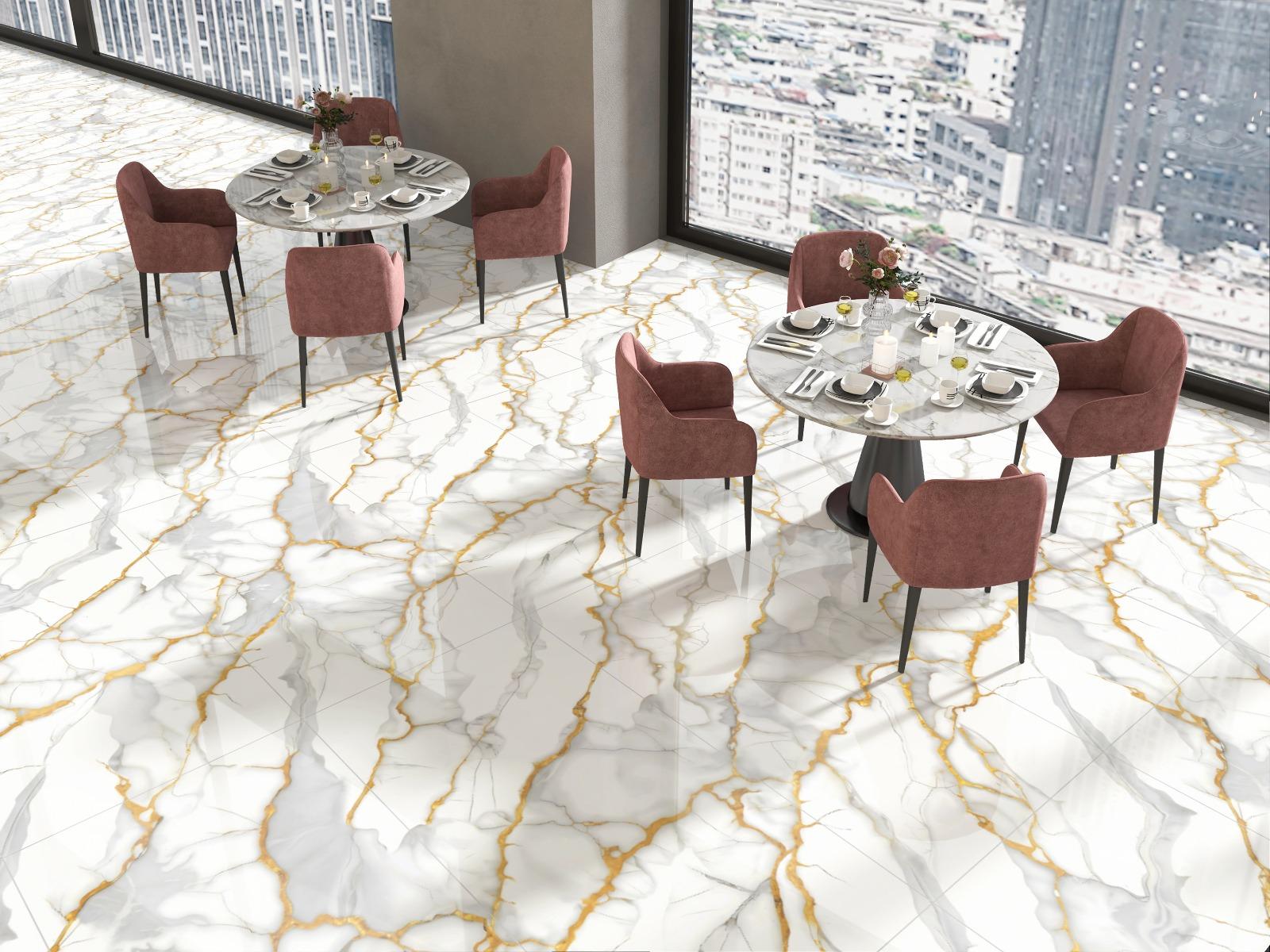
GVT, PGVT, double charge or full body? Learn how to pick size, finish and thickness, and order vitrified tiles online from IntriHub in Bengaluru.
1. What are vitrified tiles?
Vitrified tiles are engineered ceramic surfaces produced through hydraulic pressing of a refined mineral mixture comprising 40% silica, 30% feldspar, and 30% kaolin clay, fired in industrial roller kilns at extreme temperatures exceeding 1200°C to 1250°C. Under this intense thermal vitrification cycle, the silica melts and fuses into a non-porous, glass-like internal matrix.
According to the Bureau of Indian Standards (BIS IS 15622) and international standard ISO 13006 (Group BIa), a tile is technically classified as vitrified only when its water absorption rate is strictly below 0.5%. In practice, premium vitrified tiles manufactured in India achieve water absorption rates lower than 0.08%, rendering them almost completely impervious to moisture, oil stains, acidic detergents, and structural debonding.
When compared to natural marble or granite, vitrified tiles provide consistent dimensional precision, uniform thickness, zero natural fissures, and require no periodic polishing or chemical sealing. For builders ordering building materials online, vitrified tiles represent the most reliable, durable, and architecturally versatile floor covering for modern Indian living spaces.
2. Types of vitrified tiles
Understanding the technical differences among tile manufacturing methodologies is essential to selecting the right grade for your specific room conditions and vehicular or pedestrian traffic loads:
| Tile Classification | Composition & Layering | Surface Finish | Water Absorption | Ideal Applications |
|---|---|---|---|---|
| Soluble Salt / Nano Vitrified | Single layer pressed tile with liquid color pigments infused into the surface before firing; finished with a nano-chemical seal. | Glossy ivory / plain printed | < 0.5% | Rental properties, budget residential bedrooms, utility areas. |
| Double Charge Vitrified | Manufactured by pressing two distinct layers of body clay: a 3mm to 4mm upper wear layer of enriched pigment over a durable base body. | Polished glossy / semi-matte | < 0.1% | Living rooms, office corridors, shopping malls, high foot-traffic residential spaces. |
| Glazed Vitrified (GVT) | Features a high-definition digital inkjet print layer protected beneath a specialized ceramic glaze, reproducing natural wood, slate, and marble veins. | Matte, rustic, satin, wood-grain, carved | < 0.2% | Kitchen floors, bathrooms, outdoor balconies, boutique cafes, feature accent walls. |
| Polished Glazed (PGVT) | GVT tile processed with an added nano-diamond polishing cycle over the glazed layer to create high specular light reflection. | Mirror-polished high gloss | < 0.1% | Grand living rooms, master bedrooms, hotel lobbies, modern luxury interiors. |
| Full Body Vitrified | Solid homogeneous pigment blend uniform through the entire cross-sectional thickness. Scratches or heavy wear reveal identical color beneath. | Matte, fluted, anti-skid | < 0.05% | Heavy vehicular parking, staircases, commercial department stores, industrial floors. |
3. How to choose the right size (2x2, 2x4, 4x4 ft)
Tile sizing directly dictates spatial perception, installation speed, and the frequency of joint grout lines in your home. The modern industry has evolved significantly beyond old-school small squares:
The traditional residential standard. Highly cost-effective and easy for a single mason to handle. Ideal for smaller bedrooms, kitchens under 100 sq.ft, and budget apartment renovations.
The contemporary sweet spot for Indian living rooms, dining halls, and master suites. The rectangular aspect ratio creates expansive optical length and cuts joint count in half compared to 2x2 tiles.
Large-format porcelain slabs designed for luxury villas and expansive duplexes. Delivers an uninterrupted Italian marble slab appearance, but requires specialized suction clamps and level subfloors.
Rule of thumb: In rooms smaller than 120 sq.ft, avoid oversized 4x4 ft slabs, as tile cutting around doorframes and columns will produce disproportionate wastage (often exceeding 20%). For living and dining areas above 200 sq.ft, 600x1200mm provides the finest balance between luxury aesthetics and low installation wastage.
4. How to choose the right finish (glossy, matte, anti-skid, textured)
Every surface finish serves distinct functional safety criteria and aesthetic properties:
- Glossy & High-Gloss (PGVT): Produces brilliant light bounce that brightens rooms with limited natural daylight. Extremely easy to mop clean, but becomes slippery when wet. Strictly avoid on bathroom floors or balconies.
- Satin & Silk Matte (GVT): Delivers a soft, velvety tactile feel without intense optical glare. Conceals minor dust, water droplet marks, and footprints significantly better than high-gloss tiles. Exceptional for bedrooms, living rooms, and kitchen backsplashes.
- Anti-Skid & Grip Matte (R10 / R11 Rating):Formulated with abrasive micro-granules or etched relief patterns to provide high dynamic friction (COF > 0.6). Essential for wet bathroom floors, elderly-friendly residences, and utility washing yards.
- Textured & Sugar / Carving Finish: Incorporates localized glaze reliefs along simulated marble veins or stone clefts. Resists shoe scuffs and provides grip while delivering striking tactile dimensionality under warm cove lighting.
5. 7 checks before ordering tiles online
Procuring tiles through a digital marketplace delivers convenience and factory-direct savings, provided you perform these 7 technical verification checks:
- 10% Cutting Wastage Allowance: Always calculate net room area in square feet, multiply by 1.10 (+10%), and divide by the box coverage area (typically 15.5 to 16 sq.ft for 600x600mm). Never order only the exact net floor measurement.
- Single Batch & Shade Code: Tiles fired in different kiln batches may exhibit slight shade variations (tonality). When ordering on IntriHub, we guarantee identical batch numbers across all boxes in your consignment.
- Water Absorption Specification (< 0.5%): Ensure the manufacturer technical datasheet verifies Class BIa classification per IS 15622 standards.
- Rectified Edges for Tight Grout Joints: Rectified tiles have precision diamond-cut 90-degree edges, permitting razor-sharp 2mm spacer grout lines with seamless epoxy fillers.
- Compatible Polymer Tile Adhesive: Vitrified tiles cannot bond with traditional sand-cement slurry because they do not absorb water. Always pair with Type 2 polymer-modified adhesive (C2TE standard).
- Plumbing and Electrical Coordination: Confirm that concealed piping and electrical conduits are completed before tile installation. Consult our electrical & plumbing material checklist and stage-wise construction materials guide.
- Unboxing Inspection & Transit Insurance: Verify that the logistics provider guarantees damage replacement. IntriHub offers 100% free zero-breakage transit replacement for broken tiles reported upon delivery.
6. Best tile for kitchen, bathroom, living room, parking (quick guide)
Living & Dining Hall
Recommended: PGVT or Satin Matte GVT in 600x1200mm format with Statuario or Italian marble patterns. Delivers an opulent, spacious feel with minimal grout interruption.
Kitchen Floors & Backsplash
Recommended: Stain-resistant GVT matte on floors; glossy subway or glazed vitrified tiles on backsplashes for effortless wiping of cooking oils and turmeric stains.
Bathrooms & Wet Areas
Recommended: Anti-skid matte vitrified tiles (300x300mm or 600x600mm with R10 grip rating) on floors; 300x600mm glossy or ceramic wall tiles up to 7-foot lintel height.
Driveway, Parking & Verandas
Recommended: 12mm to 16mm heavy-duty full-body vitrified parking tiles (300x300mm or 400x400mm) capable of bearing continuous vehicle loads and weather exposure.
7. Vitrified vs ceramic tiles
While both originate from clay, their raw composition, firing pressures, and physical properties diverge substantially:
| Technical Property | Vitrified Tiles | Ceramic Tiles |
|---|---|---|
| Composition | Refined silica, quartz, feldspar, and kaolin clay | Natural earthenware red or white clay |
| Water Absorption | < 0.5% (Non-porous, impervious) | 3% to 10% (Porous body) |
| Mechanical Strength | Very high (Modulus of Rupture > 35 N/mm²) | Moderate (Modulus of Rupture ~ 15-20 N/mm²) |
| Durability & Scratch Resistance | MOHS hardness 6 to 8; resilient to high foot traffic | MOHS hardness 3 to 5; prone to glaze chipping |
| Best Application | Floors, high-traffic commercial spaces, exteriors | Internal wall cladding, bathroom backsplashes |
8. Why order vitrified tiles from IntriHub
IntriHub is India's digital marketplace connecting architects, builders, and homeowners directly with verified ISO-certified tile manufacturing hubs in Morbi and Rajasthan. By eliminating intermediate broker markups, we deliver transparent factory-direct pricing alongside enterprise-grade logistics.
60-minute delivery in Bengaluru; 3-7 days Pan-India (outside Bengaluru). Never pause your site masons.
Heavy-duty wooden crates with reinforced foam edge-guards. Any transit chip is replaced immediately free of charge.
Compliant B2B GST tax invoices with standardized HSN 6907 classification for seamless corporate accounting.
Ready to choose your vitrified tiles?
Explore 500+ verified vitrified designs, calculate box requirements with built-in wastage calculators, and get direct site dispatch.
Related Technical Guides & Project Resources
Planning a complete residential or commercial build? Explore our comprehensive directory of building materials online, review our contractor building material checklist, consult the electrical material selection guide, browse our complete tiles category catalog, or access the full material guides knowledge base.
9. FAQs (Frequently Asked Questions)
What is the primary difference between GVT and PGVT tiles?
Glazed Vitrified Tiles (GVT) feature a digitally printed decorative surface with a satin, matte, or carved texture, offering moderate light reflection and superior slip resistance. Polished Glazed Vitrified Tiles (PGVT) receive an additional high-precision nano-polishing process over the glaze, producing an ultra-glossy, mirror-like surface ideal for luxury living rooms and executive lounges.
Which vitrified tile size is best for living room floors in Indian homes?
For standard Indian apartment living rooms (150 to 300 sq.ft), large-format 600x1200mm (2x4 ft) or 800x1600mm tiles are optimal. They minimize visible grout joints by up to 55% compared to conventional 2x2 ft tiles, creating an expansive, seamless marble-slab aesthetic that visually enlarges compact urban spaces.
How much extra tile quantity should I order for cutting and wastage?
Always order a 10% wastage buffer for regular parallel grid laying patterns. If you are specifying complex diagonal layouts, herringbone patterns, or working in rooms with multiple curved alcoves and plumbing cutouts, allocate a 12% to 15% cutting allowance. Ordering adequate quantity in a single production batch guarantees consistent shade tonality and dimensional calibration.
Can vitrified tiles be laid directly over existing mosaic or marble flooring?
Yes, vitrified tiles can be successfully installed over existing clean, sound mosaic or terrazzo flooring using high-bond Type 2 polymer-modified tile-on-tile adhesive (such as C2TE formulation). This technique avoids noisy, time-consuming floor dismantling while maintaining rigid structural adhesion.
What is IntriHub's delivery timeline for vitrified tile orders?
IntriHub delivers with guaranteed 60-minute delivery in Bengaluru; 3-7 days Pan-India (outside Bengaluru). Orders are dispatched in heavy-duty palletized crates with reinforced edge protectors to ensure zero transit breakage directly to your construction or renovation site.